Community-participatory soft disaster prevention

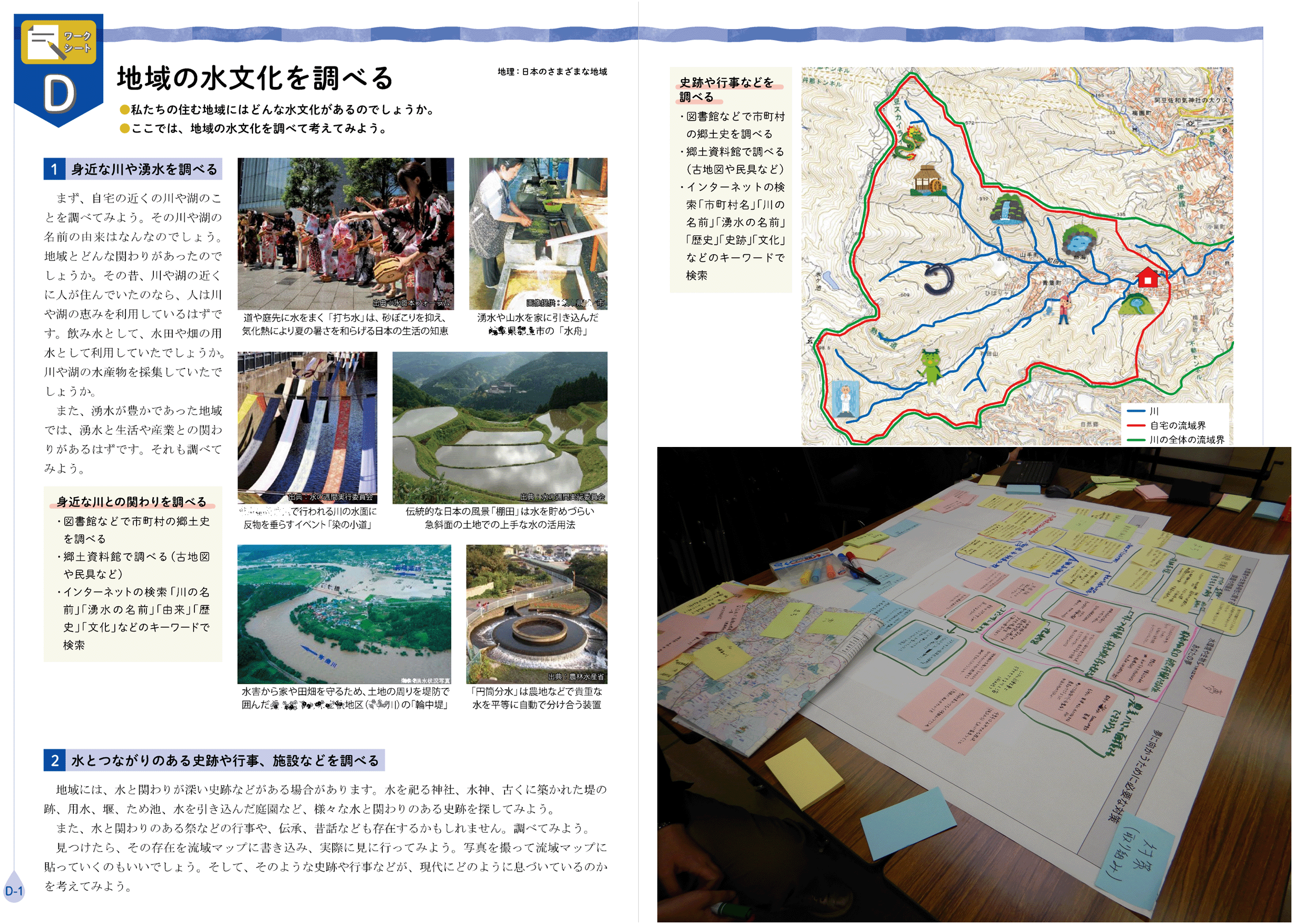
Regional activation
Creating attractive towns by discovering, refining, and utilizing local resources.
While the challenges and objectives of "regional revitalization" initiatives vary, it is crucial that stakeholders and the community itself think about and implement these initiatives independently and continuously, and that everyone can feel the benefits of that "revitalization."
It is necessary to set goals based on the consensus of local residents and stakeholders, compile them into plans and strategies, promote them, and measure their effectiveness. We support this series of initiatives from a professional standpoint to promote them more effectively and efficiently.
Achievements
Industry-academia collaborative community-participatory monitoring project
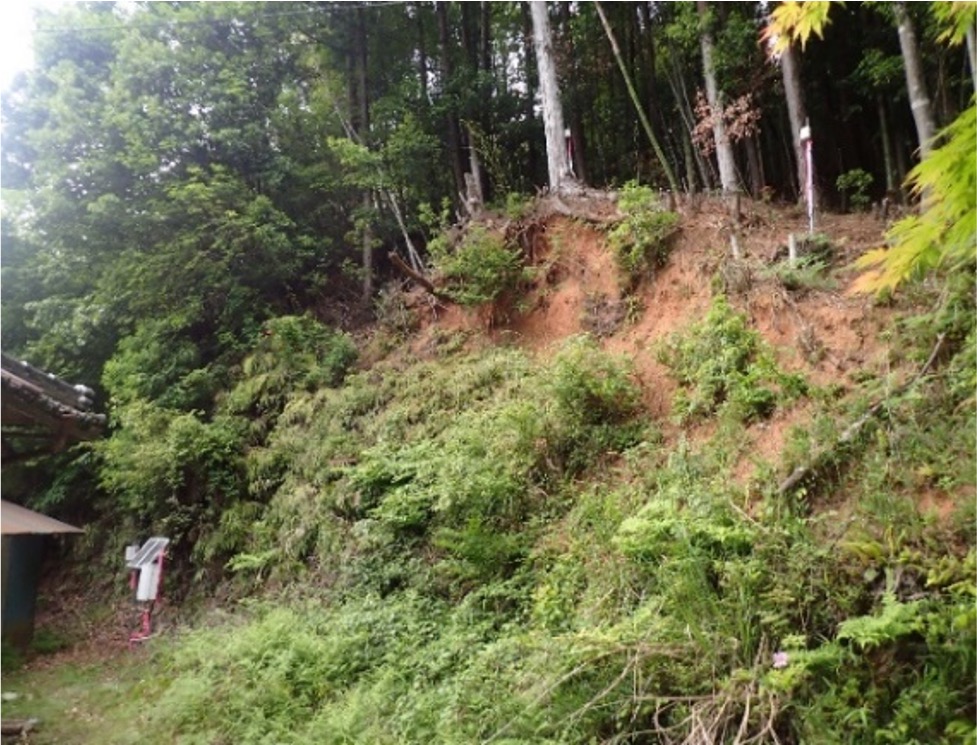
To protect lives from landslides, which are becoming increasingly frequent due to the effects of climate change, we have developed a resident-participatory slope disaster prevention monitoring system that utilizes the IoT tilt meter "Kantarō".
As a result, it was confirmed that IoT inclinometers are expected to serve as an evacuation switch to help residents escape from nearby slope collapses, and that they are useful in identifying dangerous slopes that behave sensitively to rainfall.
Joint research: Kyoto University, Tottori University
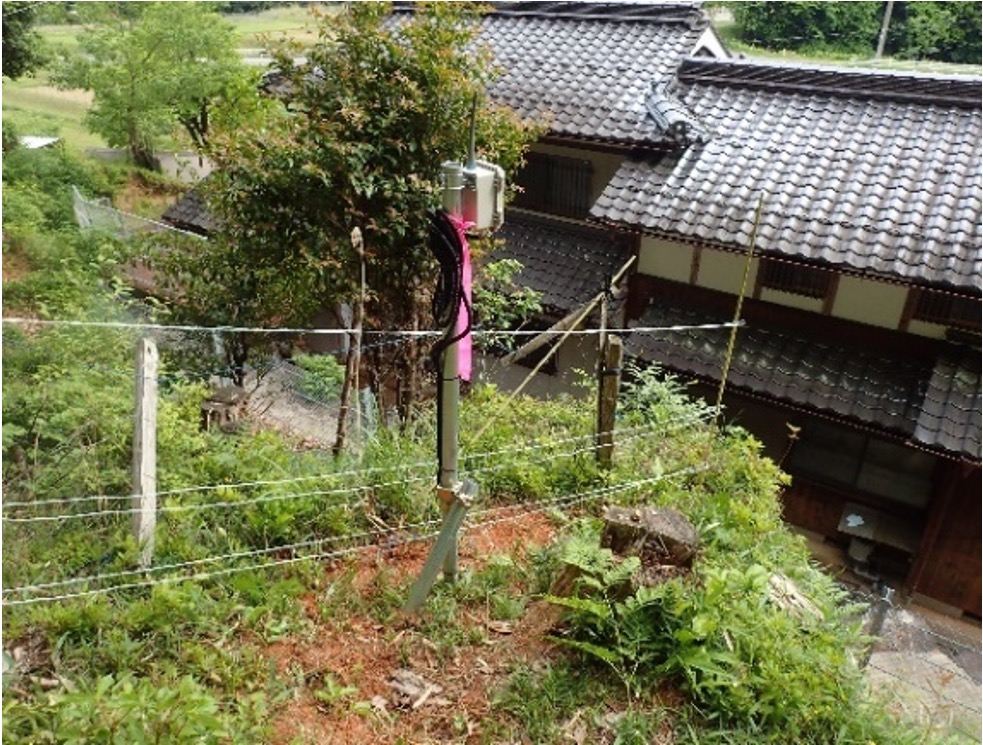
Evacuation Action (Evacuation Switch) Image
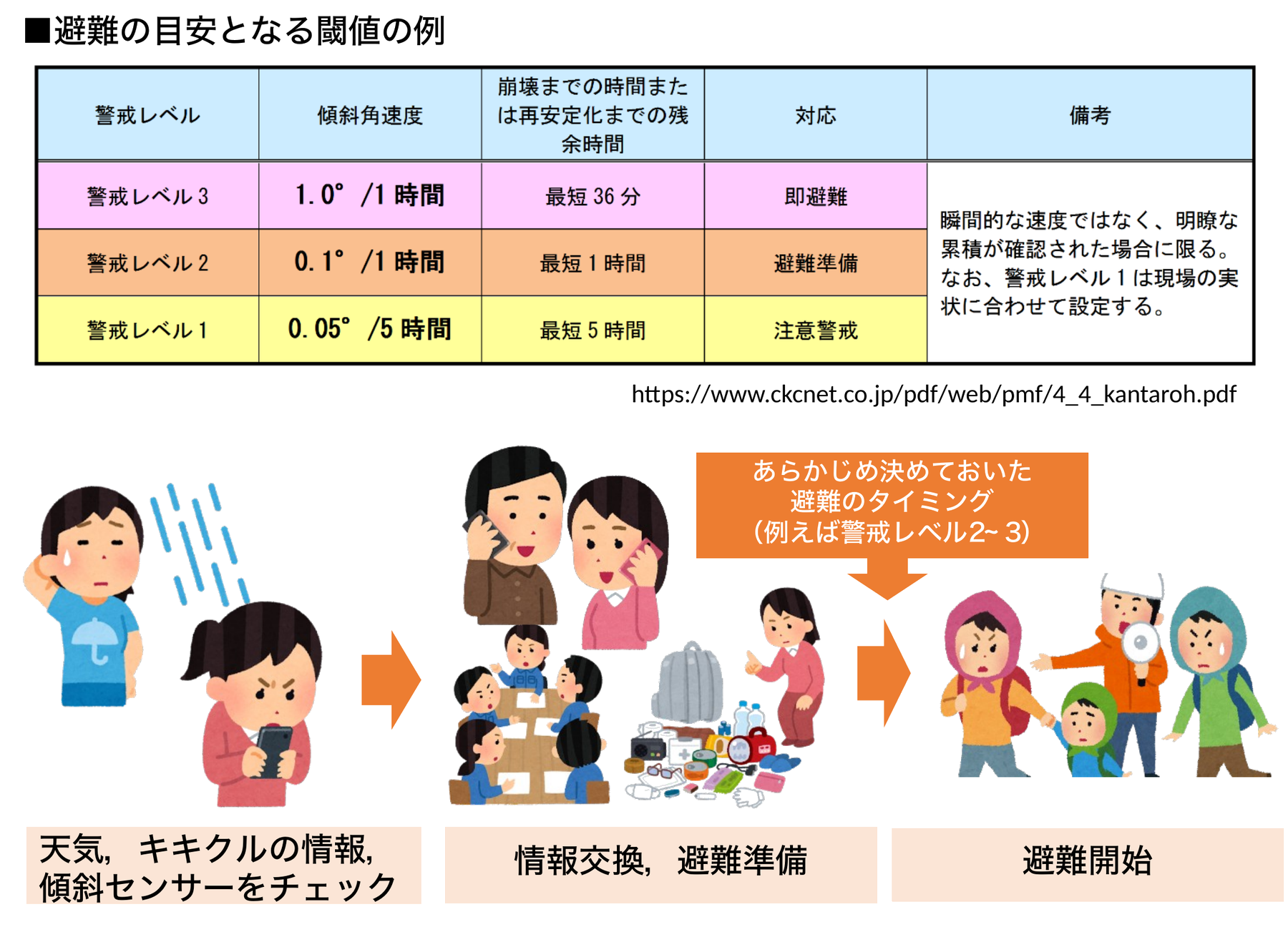
Procedures for resident-participatory monitoring
(1) Identify high-risk slopes.
① Conduct microtopographic and geological analysis, field surveys, and local interviews in areas designated as landslide hazard zones.
② Identify areas with a high risk of slope collapse.
③ Identify houses and buildings that should be evacuated and identify areas with significant damage.
(2) Install an IoT tilt sensor
① Consideration of installation locations for IoT tilt sensors
② Installation of IoT Scaling sensors
(3) Begin slope monitoring by residents
① Inform residents about the condition of slopes at high risk of collapse and the expected damage.
② To help people understand the functions, roles, and alert timing of IoT tilt sensors.
③ Discuss evacuation procedures (timing, evacuation location, etc.) in the event of a warning alert.
④ Begin slope monitoring by residents.
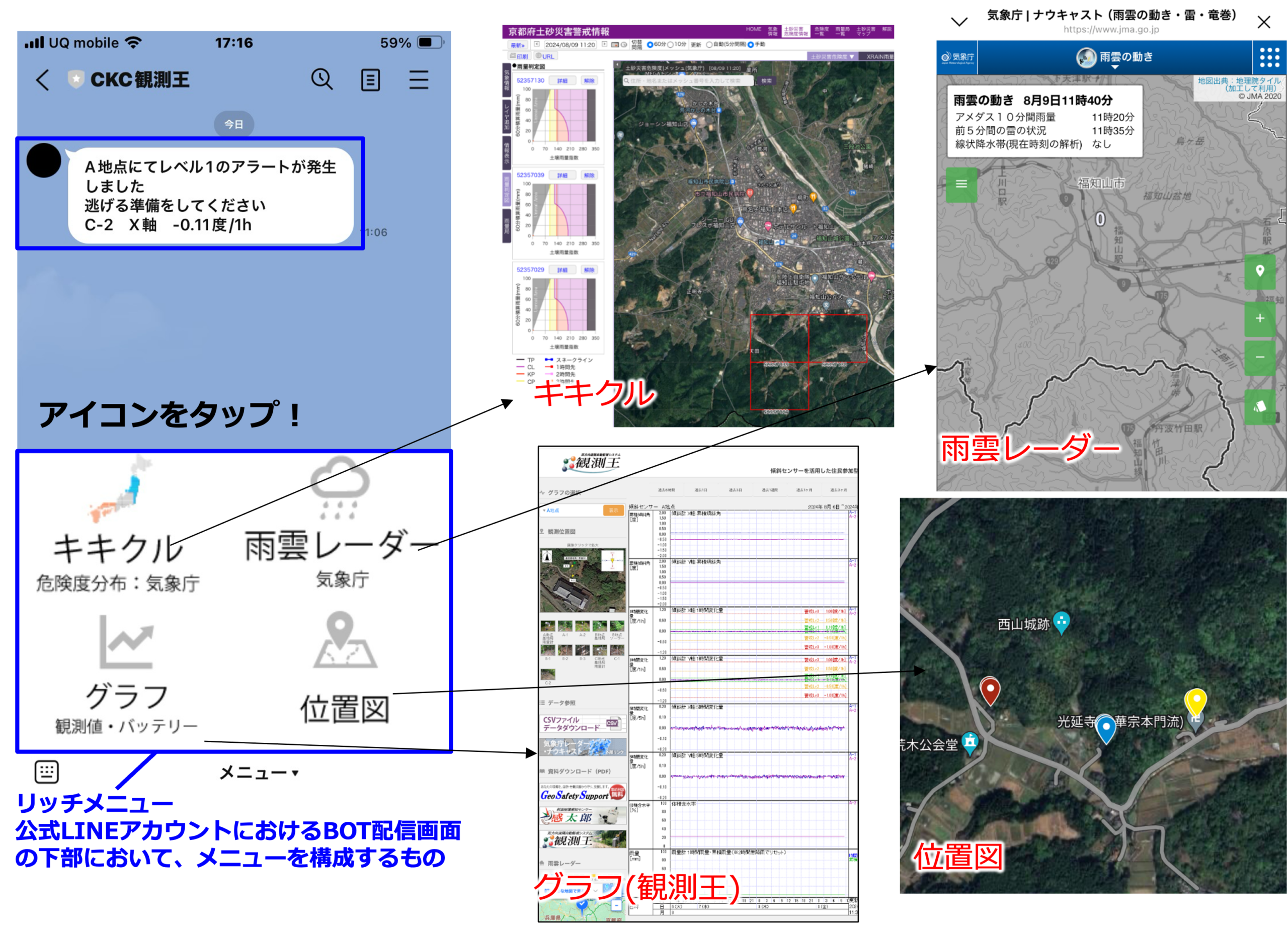
LINE Alert Function
You can check Kikikuru, rain cloud radar, observation graphs (Observation King), and location maps from the rich menu of the official LINE account. By tapping the icons, you can quickly access the information you need.