


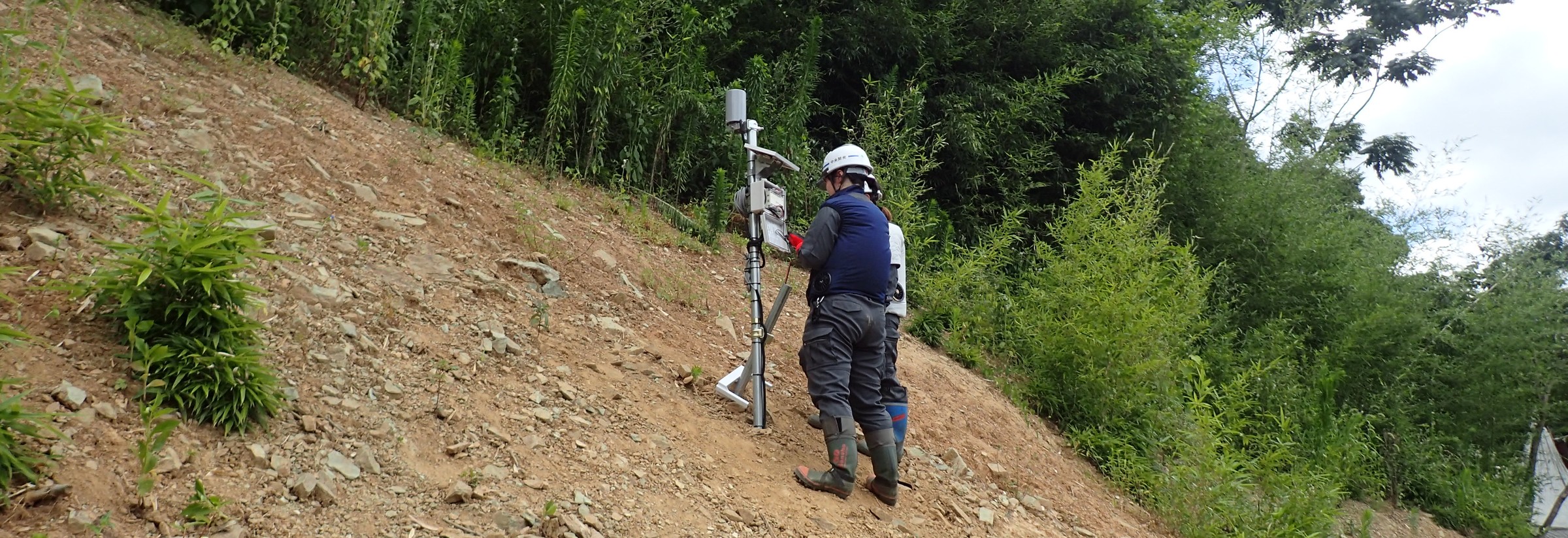
Increasingly severe weather-related disasters,
The inevitable evolution of monitoring technology
Recent weather data and disaster statistics clearly indicate that conventional disaster prevention measures are at a turning point.
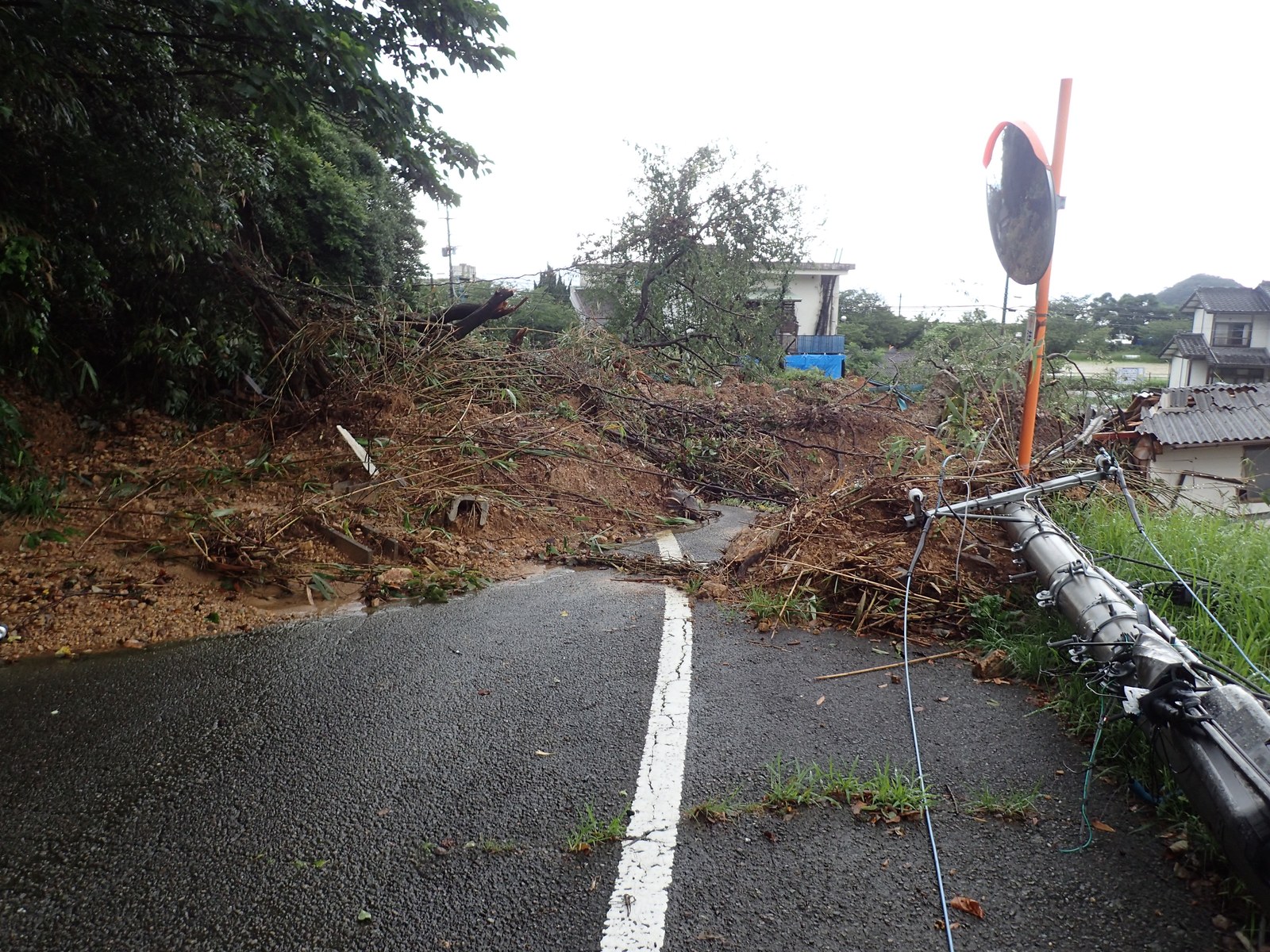
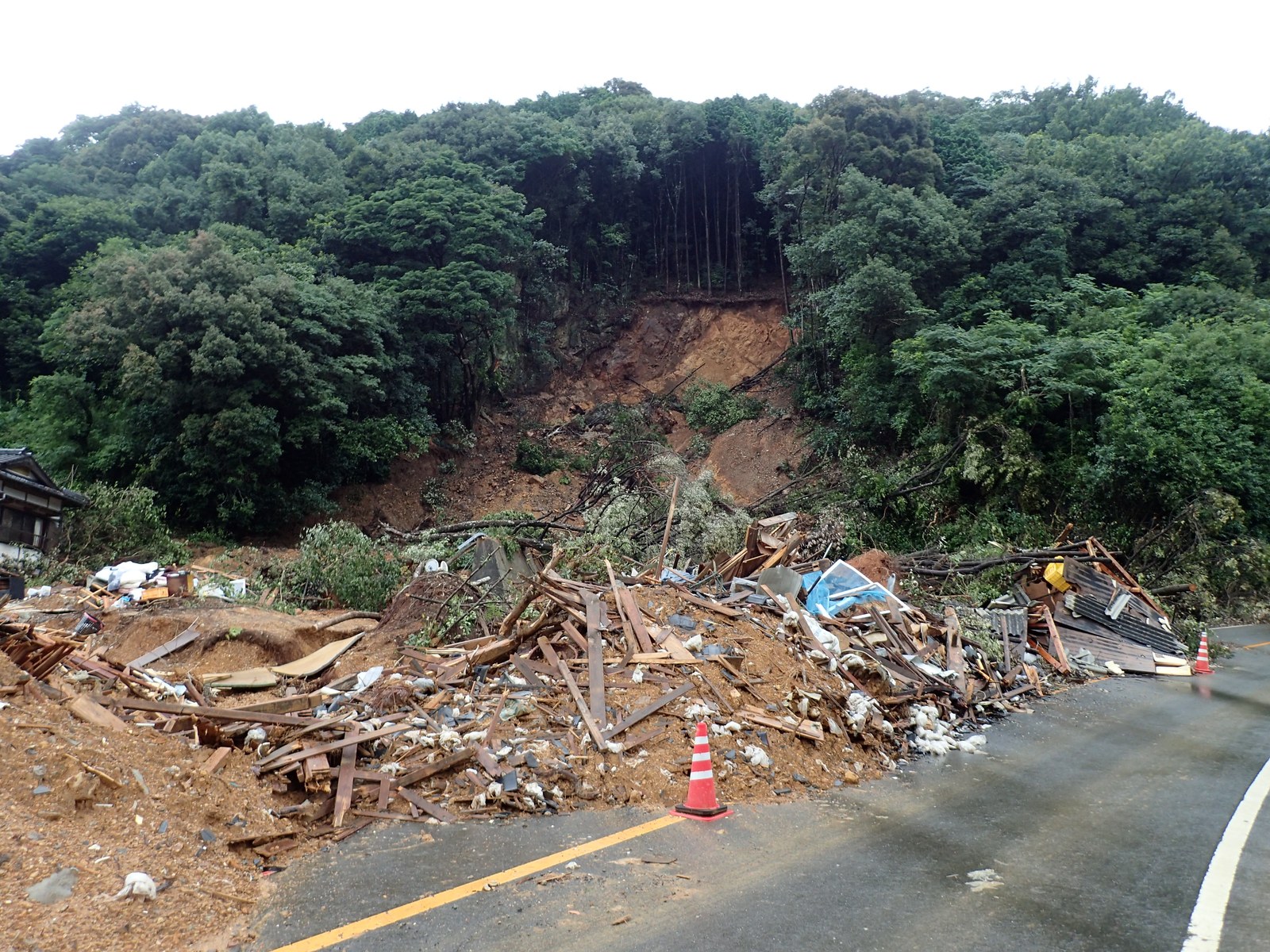
An innovation in "direct monitoring" that detects danger as quickly as possible and saves lives.
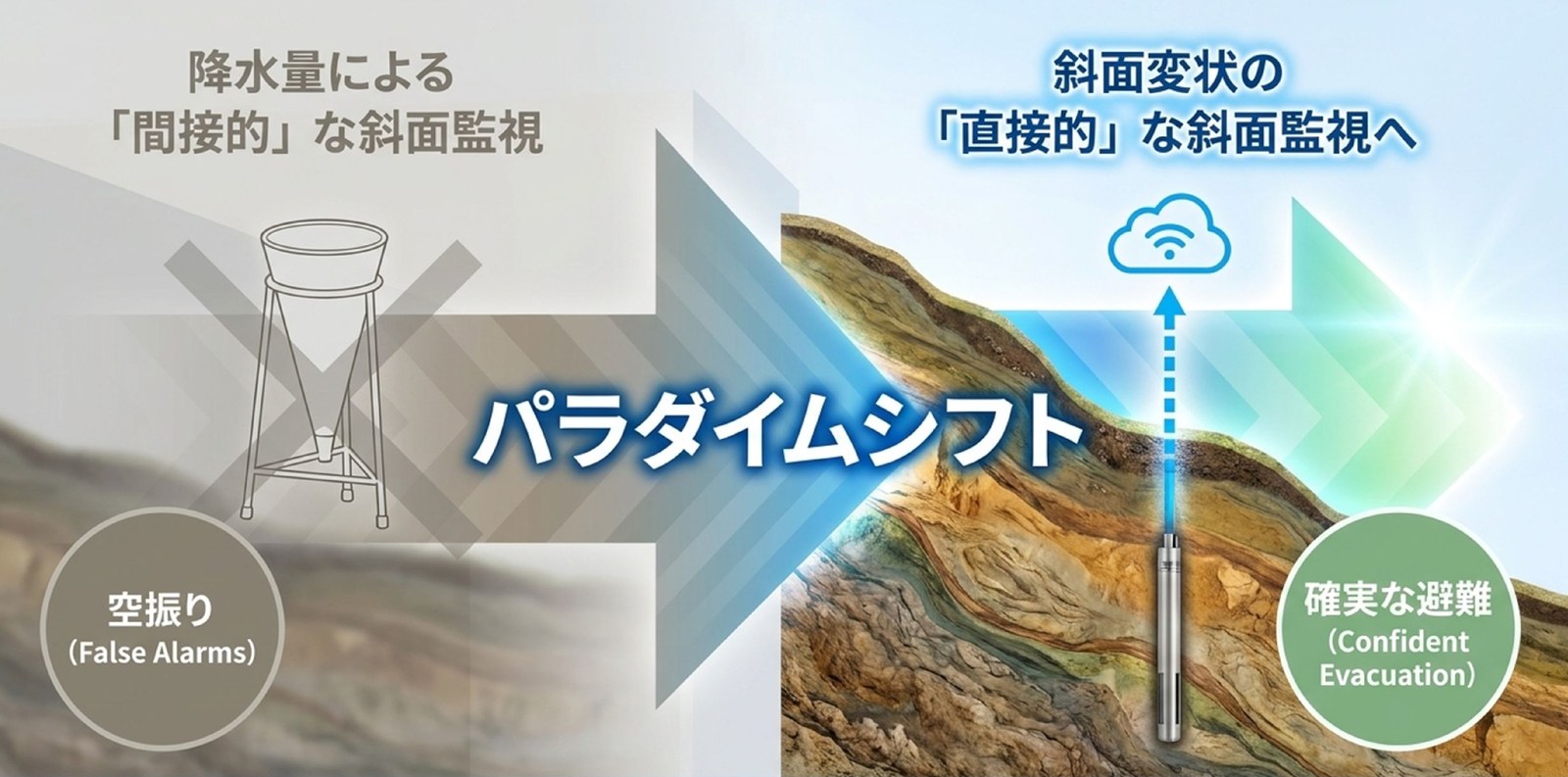
From "indirect monitoring" based on rainfall to "direct monitoring" that captures ground movement.
In response to increasingly severe landslides, what is needed now is not just an indicator of "how much rain has fallen," but a technology that can grasp "how slopes are actually moving" in real time. Chuo Kaihatsu Co., Ltd.'s disaster prevention technology, centered on "Kantarou F-Alert," which boasts a track record of over 1,700 installations, is a "direct monitoring" solution for predicting slope collapse. As a comprehensive construction consultant, we support the earliest possible evacuation decisions and are implementing the latest IoT and DX technologies into society to realize "attractive urban development aimed at disaster prevention and mitigation."
Pickup
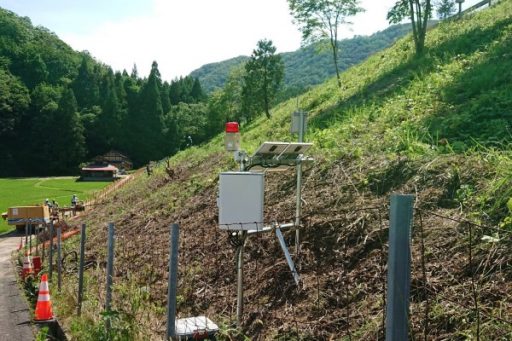 Remote automatic monitoring system "Observation King"

Observation King is a system that uses mobile phone networks to automatically transmit data (at standard 10-minute intervals) from various measuring instruments on-site, graphs it on our servers, and distributes it via the internet.
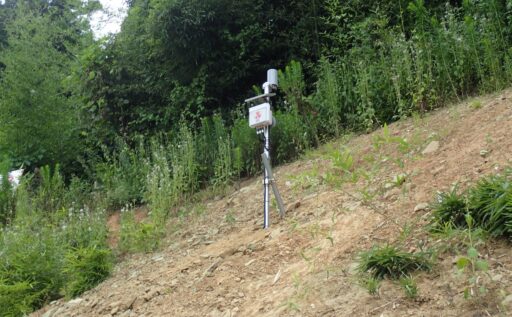 Tilt sensor "Kantarou F-Alert"
Kantaro F-Alert is a tilt sensor that detects early signs of landslides.
Like J-Alert, it provides a system that allows anyone to intuitively detect and act upon danger, setting a new global standard for slope monitoring.
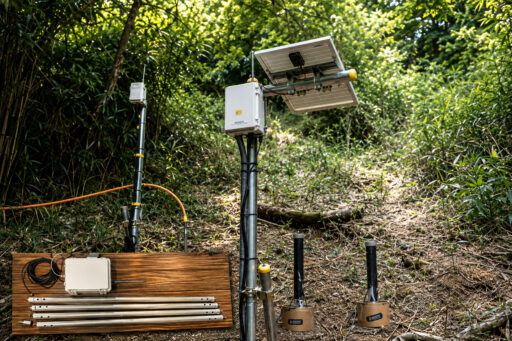 IoT multi-stage inclinometer “Kta”
This is a simple, multi-stage in-situ tiltmeter that detects underground slope changes using tilt sensors installed in multiple stages. When combined with "Okanso-o" (Observation King), it enables rapid information provision regarding slope disasters.
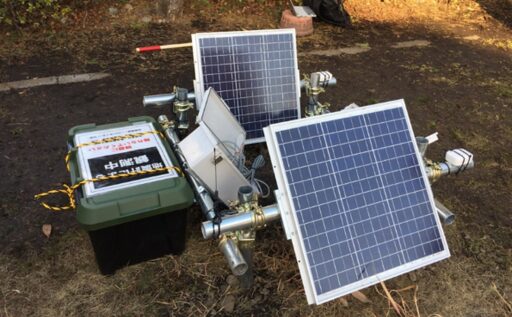 IoT vibration sensor "Shinsuke"